Postcard from the Caribbean
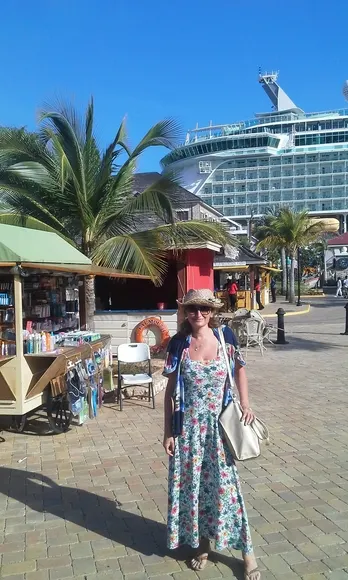
Thanks to a prize won at the conference of London’s Economist magazine on the theme The World in 2014, the founder of the Art Press Caravan and PR of Bitef, Slavica Hinić, recently returned with her partner Borislav Petrović from an unforgettable seven-day Caribbean cruise.
After a short and exciting stay in New York, we arrived in Fort Lauderdale, a beautiful city in Florida also called the “American Venice”. There, after a brief stay and an excursion to Miami Beach, the next day we boarded the ship Independence of the Seas, the lavish 12-storey cruiser of the Royal Caribbean company, which can hold about six thousand people. A true little floating city with 1,600 crew members from 66 countries!
Cruising is a particularly magical experience and a once-in-a-lifetime adventure that no other kind of holiday can offer. On this kind of luxury ship, every connoisseur can find something to match their wishes and sensibility — from climbing a mountain in the middle of the ocean, playing golf, basketball, surfing the waves, relaxing in the spa centre, sunbathing on the deck, swimming in the pool, to watching films from an enormous jacuzzi, enjoying theatrical performances like those on Broadway or spectacles in Las Vegas. Not to mention that every morning you wake up in a new exotic country! Then, ever anew, you begin a new adventure. We were the only guests from Serbia, and we could hear the Serbian language only from a handful of crew members. There was also crew from Croatia, Bosnia, Montenegro, Macedonia. Almost the entire region in one place.
The first destination in this Caribbean adventure, whose symbol is the pirates of the Caribbean, after days and nights spent sailing the ocean, was the port of George Town on the island of Grand Cayman. This island is the largest and most developed of the three islands that make up the British Overseas Territory of the Cayman Islands, which were named after the caimans, a kind of lizard. Grand Cayman is almost entirely fringed by reef, with beautiful long sandy beaches, of which the most famous is Seven Mile Beach. We enjoyed the whole day in the crystal turquoise sea that laps the shore of this beach. Here you can dive amid shipwrecks, swim with stingrays, wander through mangrove swamps and ancient forest, visit a turtle farm — after which Columbus gave these islands their original name Las Tortugas (turtles) — or watch the colourful array of marine life. Numerous picturesque gardens and untouched natural areas also conceal a rare species of lizard — the blue iguana!
We had just conquered Cayman when the next morning a new Caribbean destination welcomed us — Falmouth, a charming little town on the northern coast of Jamaica. Although the first associations with Jamaica are dreadlocks, reggae music and Bob Marley, Jamaica offers much more than that. It is adorned by green mountains, tropical forests, beautiful waterfalls, rivers and the crystal water that surrounds its shores. Besides its exceptional natural beauty and white sandy beaches, there are also entertainment centres, duty-free shopping complexes with famous brands, shops with semi-precious and precious stones, the city of Montego Bay with its many boutiques, restaurants and bars, and world-class golf courses. One of the island’s famous natural attractions is Ocho Rios with its waterfalls of 600 feet that gently flow into the warm waters of the Caribbean. There you are offered an exciting opportunity for rafting, but also for swimming with dolphins.
The last destination, after one more night slept on the ocean, was Haiti. Between spectacular mountains and lush vegetation, on the northern coast of Haiti, we caught sight of the little tropical paradise of Labadee, reserved only for Royal Caribbean’s international guests. Although it is privately owned, this beautiful destination, breathtaking at first sight, has kept the local colours and the exotic feel of distant islands. This island was discovered as far back as 1492 by Columbus on his first voyage to the New World. The island’s first name was La Isla Española; later, through colonisation by France, it changed its name and adopted the French language as its official language, alongside Creole. The island’s name derives from the word “aiti”, of the Taíno people, meaning land of high mountains. The tropical greenery of these forests, the blue of the sea and the glimmer of the sandy beaches healed even the slightest tiredness, and the magic of traditional Haitian dance and music, with the irresistible coconut cocktail — the labadu — saw us off to the ship with an indelible joy, which we still share with our friends since returning to Belgrade.