By Borislav Petrović
The Joy of Discovering Western Serbia
The Art Press Caravan through Western Serbia – Part Three
The Art Press Caravan continued its journey in the rhythm of discovering artists hidden in remote villages, of unexpected encounters with sages on the roads, but also discovered where the Indian wedding party on Mokra Gora came from and what is hidden in Kremna.
Zlakusa is nestled between Požega and Užice. When one hears the name of the place, that unusual name comes into the centre of attention. The Art Press Caravan came for something far nobler, drawn by the artistic gift of the locals of this village, whose knowledge is passed down from generation to generation. They are masterful potters. The secret of their success is in the old technology of making earthenware vessels, from which to this day they have not departed. Earthenware vessels are made by mixing clay and calcite. The whole village lives from pottery, and the vessels are sold under the name: Užice pots. Under the hand of a skilled master, and seen with a layman’s eye, one might think it is easy. But when you take it up to try, you realise that to make an earthenware pot you have to be born to it, at least in the surroundings of Zlakusa. Although this lovely village has something evil (zlo) in its name, the members of the caravan became convinced on the spot of the opposite, that a good name is heard far. The second part of the folk saying, that a bad name is heard even farther, is not applicable to this gentle village and its big-hearted villagers.
The joy of discovery! The Art Press Caravan continued its journey in the rhythm of discovering great artists hidden in the remote villages of Western Serbia. On the slopes of Zlatibor, between the Užice-Zlatibor main road and the river Đetinja, lies the spacious region of the village of Tripkovo. Geographically it is ideally set on sunny slopes where everything bears fruit, surrounded by fields and orchards. In slang terms, we became convinced that we had not “imagined” (utripovali) the natural beauties of Tripkovo. They make an indescribably strong impression. They overpower the harsh reality reflected in the noticeable outflow of the population. The artistic glass workshop, from which masterpieces emerge in a combination of copper and tin in stained glass, is yet another hidden pearl of Western Serbia. The Caravan discovers and collects them. It fulfils the missionary role of bringing to the light of day somewhat forgotten values, momentarily eclipsed by the imposed illusions of a consumer system that pushes superficiality as a model of valuation. The display of artistic objects in glass arouses admiration. No one expected an exhibition of artistic glass at a New York level.
When a person sees and recognises the outline of truth in these paradisiacal villages, they clearly feel how their soul has grown in relation to the body. As soon as they return to city conditions, they struggle not to lose in an instant the little healthy spirit with which they filled themselves in that paradise. Carrying in their heart the moment when their personal heavens, known only to a human being, opened, by the memory of the germ of eternity that patiently waits for us to awaken it, we, by that act of awakening, truly come to life. Thus refreshed, a person, having found themselves again, is to some extent enabled and made aware not to stray far from the essence of life they have only just touched. Everything took place in places invisible to the public eye, in hearts very well known.
For a moment we stepped out of the artistic workshop. Unexpectedly, we came upon a sight that depicts the simplicity of the genius of the heavenly artist. The event through which it was as if we had seen from within left us speechless, and joined and attached us to the thread of that inner, unexpressed joy. Namely, four dogs affectionately wound around our legs seeking a little of our attention and universal love. A snow-white little cat with turquoise-blue eyes played with them. Whoever is of a harder heart softened, and the more emotional ones melted with delight. How much we long, in this present-day routine, for disinterested companionship, for a handshake in which you recognise nobility… Put in consumer vocabulary, we are not aware of how much we long for mutual free emotions. At the same time, before us a natural panorama burst open which only then did we perceive. The view, as if it had at that moment opened before our eyes. The picture cleared for us, the frame widened. It had been right under our nose, but we had not seen it. Everything unfolded somehow harmoniously, seemingly ordinary. To the eyes of the soul, wondrous. This beautiful scene was the trigger for us to recognise several images and events in one and the same second, in one and the same space. Catharsis always happens unexpectedly. Only by simultaneous contact with nature and animals does the city person feel fullness, grasping the interpretation of the saying:
The story of this place was completed by an old woman who was guiding her three cows along the village road. She said “Good day” to us, as if we were old acquaintances. At one moment, one cow seemed to break away from her and head toward a parked car. She recognised the concern on our faces, and calmly gave an answer without waiting for our question: Don’t worry, the cows won’t damage the car. This youngest one is still a child. She comes up to the car to examine it. She is getting to know the surroundings and unfamiliar objects. These older cows know what a car looks like when it is not in motion. Even when the cows go off the road, they watch out for the grain. They have a refined gift. They do not damage the grain fields, they naturally respect them. To her question whether we were diligent, we answered: Not like you, granny… Sometimes a person, in a minute of time, gains knowledge that follows them into eternity. That is not in the power of a person, but of the Creator. Thanks to an unusual, but not chance, concurrence of circumstances. Only when the old woman had left our field of vision did it occur to us that we had received several folk lessons and pieces of wisdom from a sage disguised as a hale eighty-year-old woman who seems never to have heard of fatigue.
The Art Press Caravan continued its journey toward Mećavnik. The mountain glades on which flocks of sheep graze interrupted, for a while, every conversation on the bus. To me this was unusually dear. The sight of that scene disarmed everyone’s tongues. In fairy-tale terms, on Mećavnik the view bursts across seven hills and seven mountains. You have the feeling that wings are growing on you. You think you can fly over Mokra Gora, but you only think it. If you have never before wished for free flight, here you get that urge. To lift off the ground at least a little. You cannot get your fill of the beauty, your eye full of landscapes. Drvengrad was full of wedding guests, music from Kusturica’s films reached us from the wedding. As if we were extras who had, without arrangement, walked into a film. Like the legendary actor Peter Sellers in the role of the Indian Hrundi V. Bakshi in the film . Hrundi, unsuccessfully and clumsily, but somehow endearingly, tries to enter Hollywood through the back door. Into the world of film. We did not recall the popular Indian from the film by chance, given that half of the wedding party on the bride’s side had come precisely from India. The groom was our man from the diaspora. The atmosphere was carefree, friendly. One got the impression that the Non-Aligned Movement had come back to life. Just in case, we had to rub our eyes.
The Caravan set off toward Tara, but Kremna drew our attention. The magnetic attraction of the place where the Tarabićs prophesied and lived made us stop. Kremna was not written into the official travel plan. When a person plans a lot, they mostly make God laugh, goes the folk saying. That is exactly what happened to us. Kremna is marked and far-famed for the celebrated book . Less known is that Kremna is the first air spa in Serbia. It is set at an altitude of 800 m. That is the most favourable for the human organism. For comparison, Zlatibor is at 1000 m above sea level. This mystical place is also the centre of this region and the Kremna area. From it stretches the best view of the surroundings. Given its ideal geographical position and altitude, it is no wonder that clairvoyant people are born here. We learned that Miloš and Mitar Tarabić are the most famous, but not the only prophets born in the Kremna area. There is a folk legend that goes:
The cadastral map of Kremna has the shape and position of the former Yugoslavia. Serious symbolism. King Petar, in his time, hid in Kremna. From then on he had success in all fields of life. Through history it was shown that when one of the rulers or politicians came to Kremna, much in their life went smoothly. So say the people of Kremna. If anyone underestimated this God-given place, it did not turn out well for them. For those who were indifferent toward this region, though it had been pointed out to them, everything in their life went chaotically. To each according to measure, one might say. The assumption is that King Aleksandar and Queen Draga were dissatisfied . Because of this, they hid all the qualities that Kremna possesses, both for mountain tourism and for the beneficial influence on every person, from most of the population. They unofficially shifted the centre of mountain tourism to Zlatibor. The conclusion is that Zlatibor should retain all the honours and image it has deservedly earned over time and through quality, while unjustly neglected places like Kremna should be rehabilitated. For the sake of the general good and of future generations who, precisely in such gentle, unusual and wondrous villages, can find their peace and a cure for the troubles that befall them.
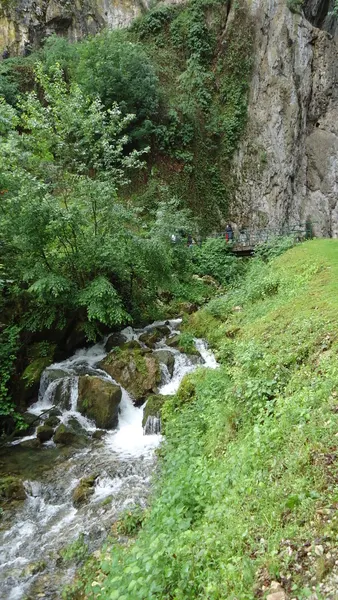
After the sudden visit to Kremna, we came to Tara. It is healing in a divine way. The waves from the sea cast sea particles onto the mountain. Under such wondrous natural influences, from May to August this mountain beauty has an especially pronounced healing effect. People who stayed on the mountain in that period testify to it. On Tara, although wood is cut, the forest renews itself. In this visible and irrefutable fact lies the beauty of natural renewal, which takes place before the eyes of lovers of a truly healthy life. Viewed and put in two words: a miracle of regeneration. The peculiarity that Tara has is . The peat deposits have made it so that when you walk across the meadow, an impression of comfort is created underfoot. If they were to put a scarf over your eyes, you would get the feeling that a carpet had been put under your feet. The maximum depth of the peat deposits was 4 metres. On the basis of an analysis of fossilised pollen grains found in the peat, the character of the vegetation and the relative age of the deposits were determined. Walking draws fatigue from the legs, the step becomes light, the feet rest even when in motion. We became convinced of Tara’s power of renewal.
The natural potentials of Serbia, whether known to all, newly discovered, or yet undiscovered, viewed comprehensively, are enormous. They offer themselves to us, in the palm of the hand. The long-discovered potentials we should use, for the general good, for the recovery of our country. They give us hope to make use of the God-given resources and through them to survive. They encourage us, using them, without anyone’s help, to set out on renewal. Step by step. By the inexorable centuries-old and folk experience, fortune will reward the brave. Newly found natural resources influence the birth of new ideas. They give direction as to how and where to use them most naturally, so that nature in return responds to us with the best fruits for respecting its wishes. Experience nonetheless tells us that, mostly, we heed our own selfish intentions, which are to our benefit and to nature’s ruin. To the will of the Giver and to the wishes of nature we rarely turn, yet we gladly accept their gifts. Their love for the human race is like a mother’s love for her wayward child. Such love knows no bounds and erases all impatience. Universal love knows how to wait, believes in a better tomorrow, in the hope that the human race will once again don the natural garb that the Giver of all good things intended for it. Undiscovered natural potentials spur us on to the strengthening of the exploratory spirit, to the patience with which we will be rewarded through some new revelation.